Für Elise difficulty and how to practice it: the four hard spots, section by section
Für Elise is rated intermediate difficulty 5 in Virtu, easy level 3 on Henle’s 1–9 scale, and upper-beginner grade B in Japan’s Zen-On Piano Pieces. The opening theme is famous, but playing the complete piece requires mastering thirty-second-note figuration in bars 32–37, rapid left-hand repeated notes in bars 61–77, and a two-octave triplet arpeggio with a chromatic descent in bars 78–83. Work each section hands separately first, and even out the fast passagework with dotted rhythms and shifting accents.
At a glance
- Virtu 5, Henle 3, Zen-On B. The most demanding passage is bars 78–83.
- The opening theme passes a single melodic line between both hands, so match tone and timing to hide the seams.
- Even out the thirty-second notes and triplet arpeggios with dotted rhythms and shifting accents.
- Practice the chromatic descent in one-beat bursts before connecting the whole run.
The edition this guide uses
We use the OpenUrtext edition in Virtu’s catalog: Beethoven’s Bagatelle in A minor, WoO 59, in 3/8, marked Poco moto. Bar numbers follow this edition, with the pickup measure numbered bar 0.
The piece follows a five-part rondo layout, A–B–A–C–A: main theme A in bars 1–22, episode B in F major and C major in bars 24–37, theme A, episode C in A minor in bars 61–77, the arpeggio and chromatic transition in bars 78–83, and the final theme A. Because the main theme returns three times, learning those 22 bars gives you more than half the piece.
Where the piece gets challenging
Evaluated passage by passage in Virtu, bars 78–83 are the most demanding, followed by episode B, episode C, and the opening theme.
- Main theme A: the right hand opens with sixteenth notes, the left hand’s broken chord takes over the line, and the right hand finishes it. Without careful matching, the handoffs sound bumpy or broken.
- Episode B, bars 32–37: thirty-second-note broken chords and scale figures form the fastest rhythmic values in the piece.
- Episode C, bars 61–77: the left hand plays a continuous sixteenth-note pedal point on low A while the right hand projects dark, dramatic chords above it.
- Transition, bars 78–83: the right hand sweeps up more than two octaves in triplet arpeggios and cascades back down in a chromatic scale.
1. The main theme: one seamless line across two hands
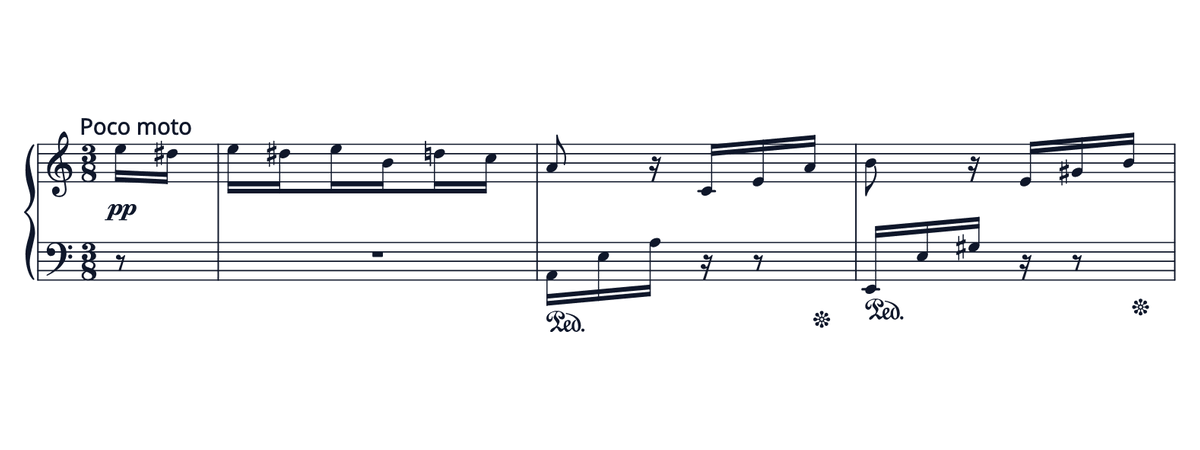
The rocking E–D♯–E belongs to the right hand alone, while the rising A–C–E–A arpeggio that follows is divided between left and right hands. Although printed across two staves, it should sound as if played by a single hand in one unbroken phrase.
- Practice each hand alone first to secure the notes, leaps, and fingering. See how to practice hands separately.
- When joining the hands, listen closely to the handoff between the last left-hand sixteenth note and the first right-hand note. Match their touch weight and spacing so no seam sticks out.
- This edition marks the damper pedal across each bar that carries a left-hand broken chord. Release the pedal cleanly before the harmony shifts or the chromatic E–D♯–E figure returns.
- As written
2. Episode B: evening out the thirty-second notes
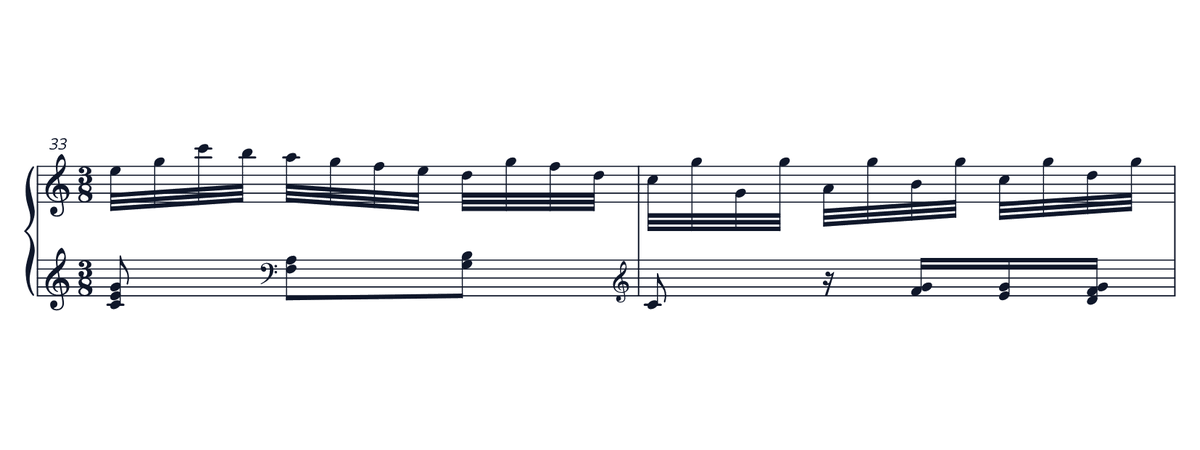
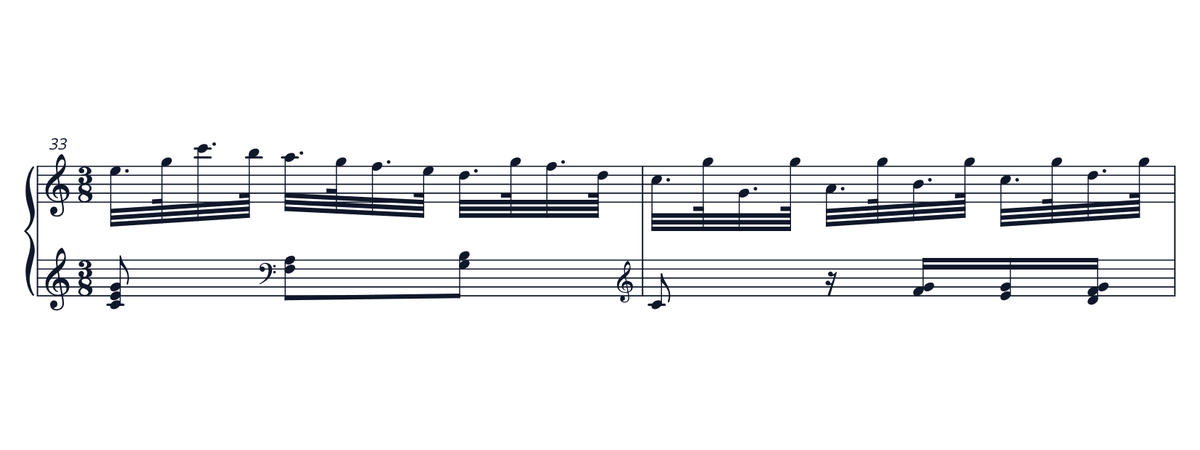
In bars 32–37 the right hand unfolds chords and scale figures in thirty-second notes. As you speed up, notes tend to clump where the thumb passes under or the hand shifts. Pair the notes and practice them long–short in a dotted rhythm and short–long in a reverse-dotted rhythm: each long note gives your next finger time to prepare cleanly. See dotted rhythm practice for the full sequence.
- As written
- Long–short
3. Episode C: keeping the repeated left-hand bass light
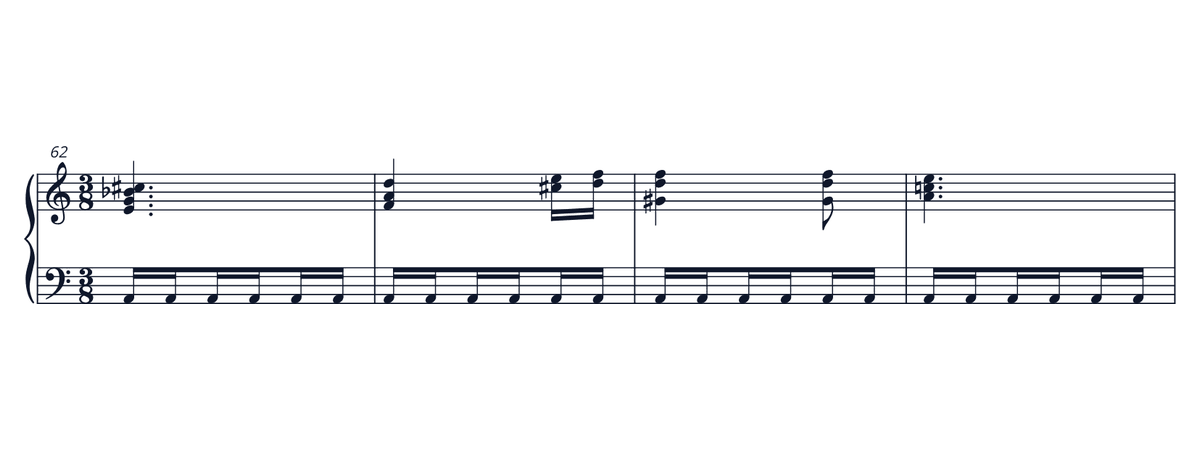
In bars 61–77 the left hand pulses a repeated low A in continuous sixteenth notes. If you lock your wrist and hammer from the forearm, fatigue sets in within a few bars. Isolate the left hand and play piano, keeping your fingers close to the key surface with a supple, loose wrist, while voicing the right-hand chords toward the top melody note. If your forearm tightens, read how to release hand tension first.
- As written
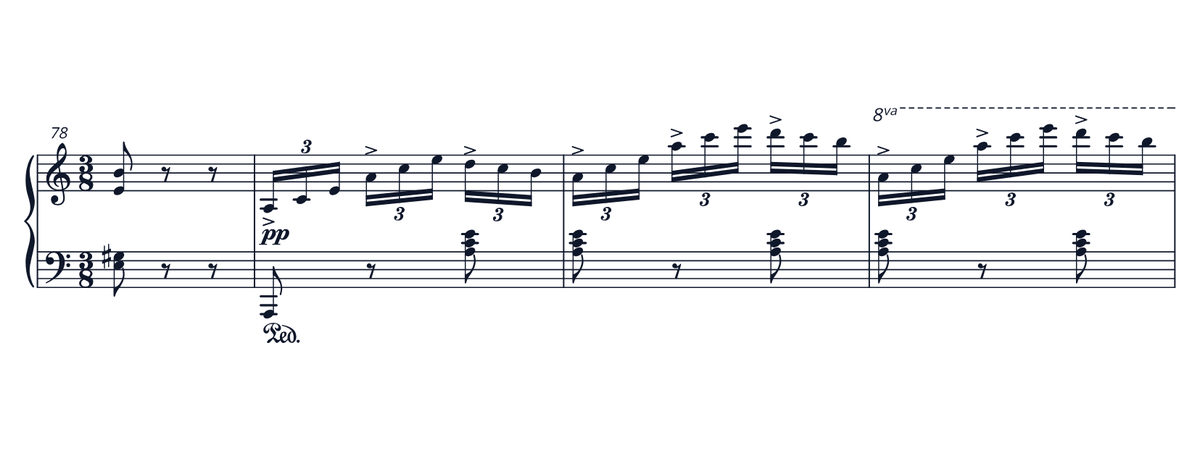
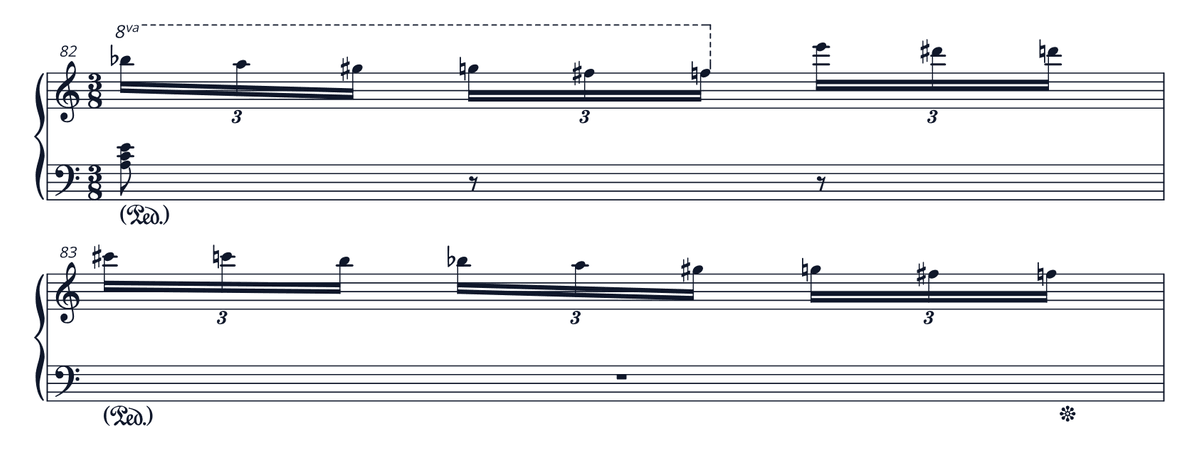
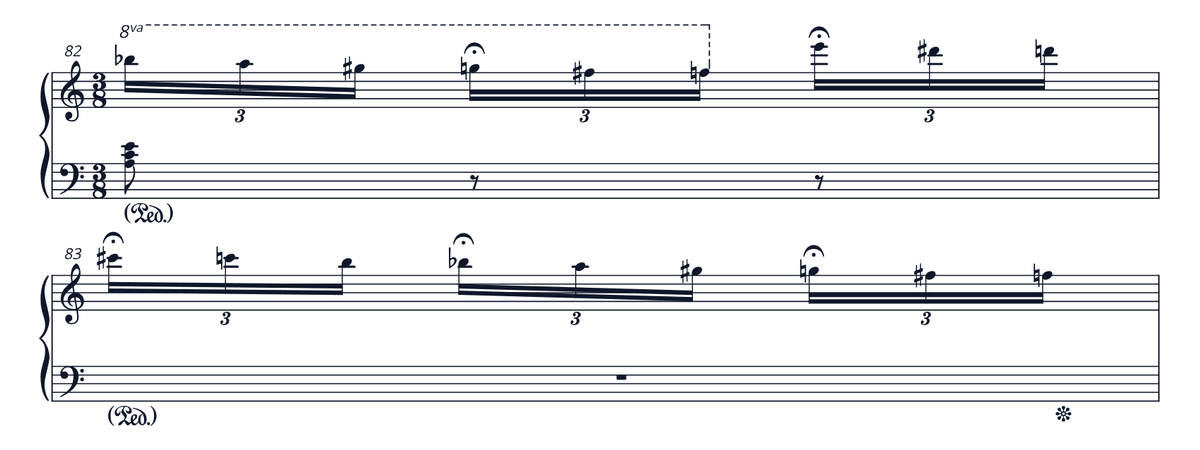
4. The arpeggio and chromatic descent: grouping by the beat
Practice the triplet arpeggios in bars 79–81 with a light accent on the first note of each triplet: landing on the beat anchors every thumb crossing. For the descending chromatic triplets in bars 82–83, play one beat at tempo and pause on the downbeat of the next triplet, then link two beats at a time before running the whole cascade. See shifting accents and short bursts.
- As written
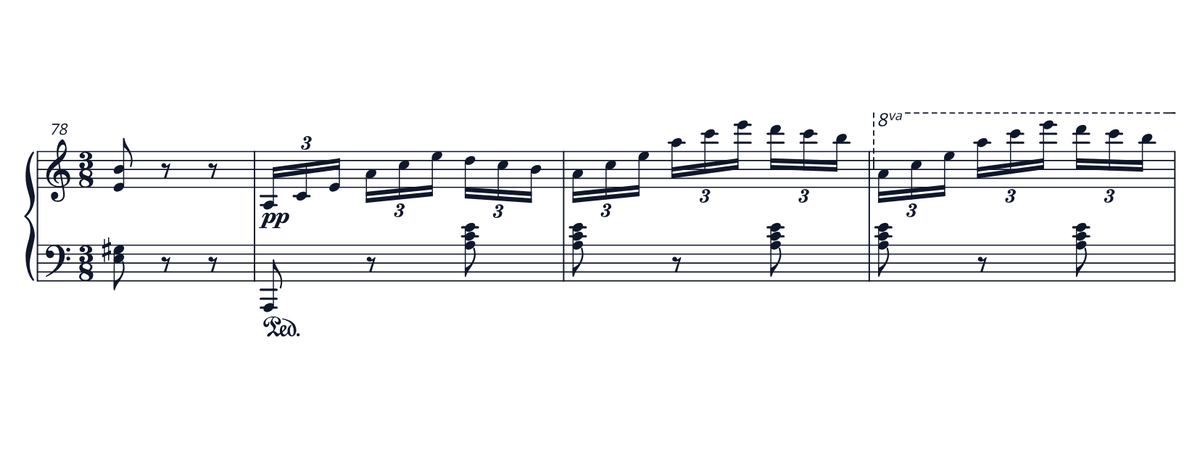
- Accent on the first
- As written
- A beat at a time
Step-by-step practice plan
- Secure the main theme firstLearn bars 1–22 hands separately, then hands together with smooth handoffs and clean pedaling. Because the theme returns three times, mastering it early anchors the whole piece.
- Isolate the episodes from day onePull out bars 32–37, 61–77, and 78–83 and work them hands separately right from the first week. You’ll progress far faster than by playing from bar 1 and crashing at the episodes.
- Use rhythmic and accent drills before raising the tempoClean up uneven thirty-seconds and triplet runs with dotted rhythms, shifting accents, and short bursts before nudging the metronome up.
- Connect the transitions between sectionsOnce each episode approaches the written tempo, practice the two bars before and after each return of the A theme so the pulse stays steady across section changes.
Practicing Für Elise in Virtu
Für Elise is free to download from Virtu’s catalog. When you add it, Virtu splits it into passages of about four bars where the music breaks, and puts each into “Today’s queue” with the speed to play it at.
- Once a passage’s left and right hands each pass, hands together opens; after that comes the written tempo and playing without the score.
- At the written tempo, when it points out a bar where one hand’s run is uneven, it shows that bar rewritten in dotted rhythms or with shifting accents and plays it first.
- Pick a bar, listen to it with “Hear score”, then compare it with your take in “Hear my playing”.
Dotted rhythms and the other six practice drills come with Virtu Plus.
Pieces to play next
Moonlight Sonata, first movementBeethoven
Difficulty 5- What it trains
- Takes broken chords further: voicing a melody and triplet accompaniment within one hand
- Hardest spot
- Bars 26–27: the right hand plays the top melody and inner triplets together while the left hand descends in low octaves.
Nocturne Op. 9 No. 2Chopin
Difficulty 6- What it trains
- Projecting an ornamented cantabile melody over wide left-hand leaps
- Hardest spot
- Bars 33–34: in the high register, the right hand repeats a delicate four-note figure with a swell and fade.
Clair de luneDebussy
Difficulty 6- What it trains
- Flowing arpeggios shared between the hands, soft voicing, and atmospheric pedaling
- Hardest spot
- Bars 35–36: the right hand floats a chordal melody above sixteenth-note arpeggios shared across both hands.
Questions
How long does it take to learn Für Elise?
The opening theme can be learned by late beginners, while the full piece, including the thirty-second notes and the triplet arpeggio, suits early-intermediate players. If you can play a Virtu difficulty 4 piece such as Satie’s Gymnopédie No. 1 or Schumann’s “Melody” cleanly at tempo, you’re ready to tackle it.
Can I learn just the opening theme first?
Yes. The first 22 bars avoid the fast episodes and make a great study in passing a melodic line smoothly between the hands and coordinating the damper pedal. Once the A section is solid, you can add the episodes one by one.
Where should I use the sustain pedal?
In the main theme, depress the pedal on the broken A-minor and E-major harmonies in the left hand and lift it before the chromatic E–D♯–E figure so the half steps never blur together. Change the pedal cleanly on every harmony change.