Blocked chords: even out broken chords and Alberti bass with chord blocking
Blocked-chord practice gathers a broken-chord pattern into a single solid chord on each beat, plays it twice through, and then returns to the written figuration. Because your whole hand learns to land in each harmonic shape ahead of time, your fingers are already poised over their keys when you play the notes separately again, making the figure sound far more even.
At a glance
- Use it when broken chords within a single hand position, such as an Alberti bass or accompaniment arpeggio, come out uneven.
- Group each beat’s notes into one blocked chord, play the passage twice, then return to the written broken figure.
- The chord tones simply need to sound together as one unit. You don’t need to play loudly or force the keys.
When to use it
Use chord blocking when gaps open up between notes as your fingers hunt for the next key in a broken chord, or when a heavy thumb makes an accompaniment figure sound bumpy. A broken chord is simply a series of hand shapes that change harmony beat by beat. Teaching your hand the complete shape first makes playing the individual notes effortless.
- Alberti basses, accompaniment arpeggios, and broken-chord figures that fit within one hand position.
- Not meant for stepwise scale runs or repeated-note figures. Use dotted rhythms or shifting accents for those.
- Whenever one hand’s figuration is noticeably less even, practice that hand on its own.
How the score changes
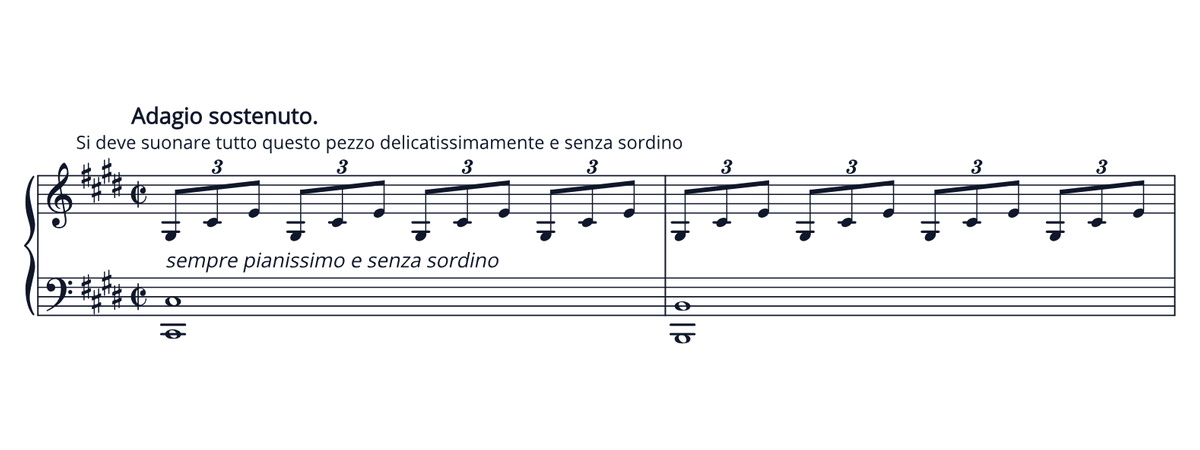
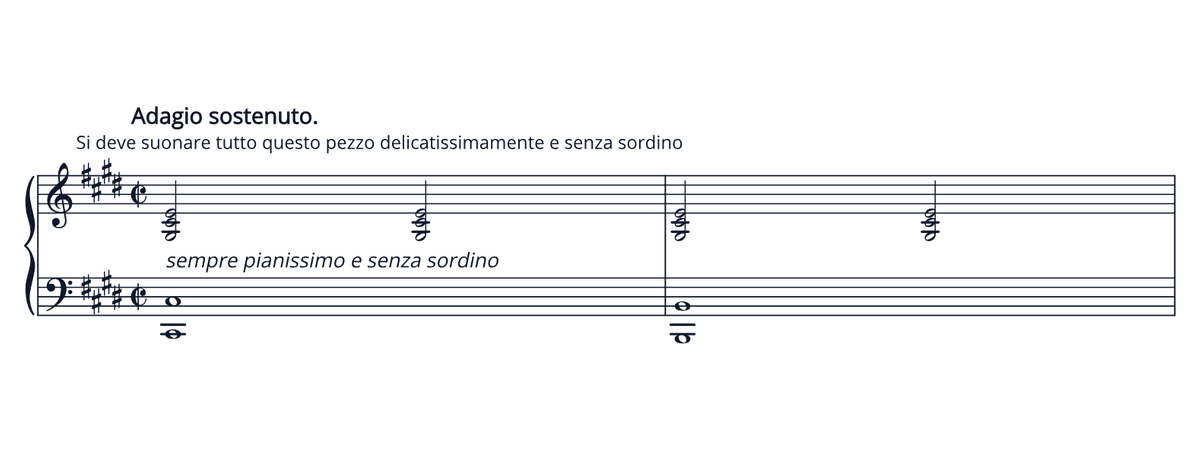
Gather the broken figuration beat by beat. When a beat holds three or more notes, block by the beat; when it holds two, as in an eighth-note Alberti bass, block every two beats; in triple meters like 3/4, block by the full bar. Collapse each group into one solid chord lasting the full group duration, omitting duplicate pitches. The meter and barlines stay the same.
- As written
- As blocked chords
Practice steps
- Once as writtenPlay the broken figure normally and listen for which fingers arrive late or stick out.
- As blocked chords, onceTouch all keys of the chord first, then press them down together cleanly. As soon as the chord sounds, release excess tension in your palm and wrist.
- As blocked chords, once moreNotice how your hand shifts smoothly from one chord shape to the next during the beat.
- Back to the written figureKeep that quiet, pre-shaped hand and play the broken pattern again, then compare how much more evenly the notes flow.
In Virtu, broken figures turn into blocked chords on the score
From the Technique stage onward, Virtu flags bars where one hand’s passagework came out uneven. When that passage is a broken chord, Play as chords appears at the top of the drill list and is usually the primary recommendation. Select it, and Virtu rewrites the bars as blocked chords and plays a demonstration.
- Virtu checks that the notes of each chord go down together. Once most chords land cleanly, the take is complete.
- If a chord splinters or rolls like an arpeggio, Virtu tells you which bar and circles that chord on the score.
- After two blocked takes, you return to the written figure and see how your evenness compares with your first run and with plain repetition.
Play as chords and all seven guided practice drills are included with Virtu Plus.
Play as chords 1/2 doneNext: 2/2
Common mistakes
Dropping onto the chord from high above
Swinging the hand down from the air produces a harsh tone and actually makes the fingers land at slightly different times. Rest your fingertips on the key surfaces first, then sink in together.
Clenching the hand after the chord speaks
Locking the wrist or squeezing the keybed makes it hard to prepare the next harmony. Release the tension inside your hand the instant the chord sounds.
Stopping before returning to the broken pattern
Blocking is a way to map out the hand positions. Always finish by playing the broken chord as written so your fingers experience moving inside that prepared hand shape.
Other drills for the same passage
- Play as chordsPress each broken chord at once to learn the hand shape first
- Dotted rhythmsPlay it long–short and short–long to even out the notes
- Shifting accentsMove a strong note along so every finger rings clearly
- Short burstsPlay a few notes fast, then stop, beat by beat
- Alternating temposAlternate slow with the speed you're practicing at
- Playing staccatoPlay every note short to keep your fingers light
- Changing dynamicsGrow louder, then softer, to even out each finger's weight
Questions
How simultaneous do the chord notes need to be?
Together enough that the ear hears a single unified chord rather than a roll. Virtu distinguishes between a solid chord, a slightly ragged chord, and a rolled arpeggio.
What if my hands are small and the blocked chord feels like a stretch?
Virtu only applies this drill to broken chords that span an octave or less within one hand position. Even so, if a chord feels uncomfortable to hold together, never force the stretch. Switch to dotted rhythms or alternating tempos for that passage instead.
Can I use blocked chords on scale passages?
No. Blocking adjacent scale notes just produces tone clusters rather than a playable hand position. Use dotted rhythms or shifting accents for scales.