Staccato practice: use a quick release to make fast passages light and even
Staccato practice plays every note of a passage short and detached twice through before returning to the written articulation. Releasing each key right after it sounds clears lingering tension from the hand and sharpens the start of every note, so when you connect the passage again it sounds lighter, cleaner, and more even.
At a glance
- Use it when fast passagework sounds heavy and smeared, or when written staccato comes out overly connected.
- Add a staccato dot to every note, play the passage twice, then return to the original score.
- Simply release each key well before the next note speaks. You don’t need to peck at the keys or play harshly.
When to use it
Use this drill when a fast run sounds bogged down or when adjacent notes bleed into one another. Holding keys down a fraction too long traps tension in the palm and delays the next finger. Practicing staccato trains a brisk key release on every note, freeing up the hand.
- Runs of four or more equal notes and active chordal accompaniments.
- Passages marked staccato in the score that still sound connected.
- Whenever one hand feels noticeably heavier or sluggish, practice that hand’s line by itself.
How the score changes
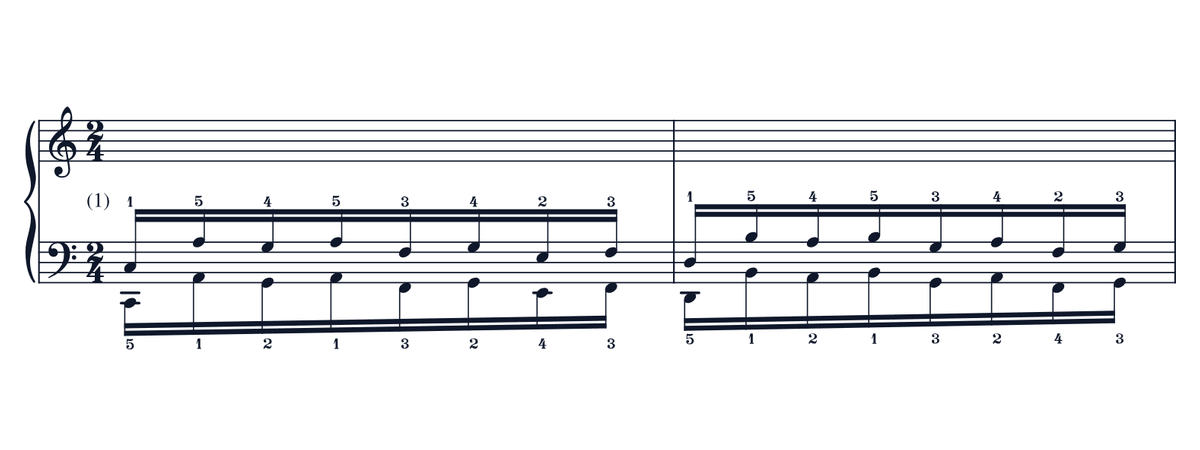
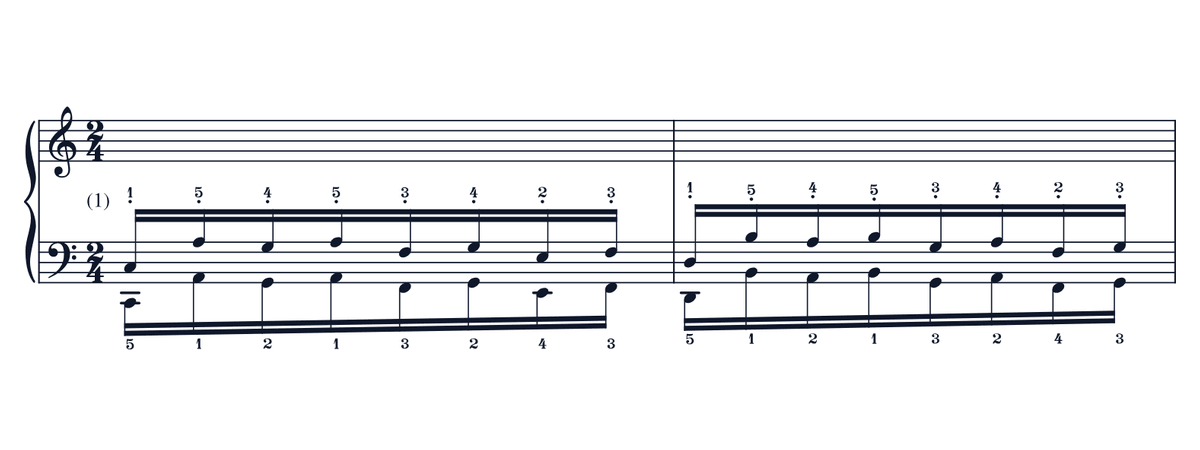
Place a staccato dot on every note of the passage in the hand you’re working on. Pitches, rhythm, and fingering stay untouched; only the length of each note changes. Use the brief silence after each release not as dead space, but as time to float the next finger right over its key.
- As written
- Staccato
Practice steps
- Once as writtenPlay the passage normally and listen for which fingers sound heavy or blur into the next note.
- Staccato, onceRelease each key right after it speaks so the sound stops cleanly before the next note begins.
- Staccato, once moreRepeat at the same tempo, feeling each upcoming finger settle over its key during the gap between notes.
- Back to the scoreReturn to the written articulation and compare: does the passage feel lighter and cleaner than before?
In Virtu, staccato dots appear right on the score
From the Technique stage onward, Virtu flags bars where one hand’s passagework was uneven or where written staccato sounded connected. Choose Practice staccato in the results, and Virtu rewrites those bars with staccato dots on every note and plays a crisp demonstration. When written staccato blurs, the recommended drill usually starts here.
- Virtu checks that you release each key well before the next note starts. Once most notes meet that threshold, the take passes.
- If notes stay connected, Virtu lets you know and gives you another staccato take.
- After two clean staccato takes, you play the original score again and see how your evenness compares with your first run and with plain repetition.
Playing staccato and all seven guided practice drills are included with Virtu Plus.
Playing staccato 1/2 doneNext: 2/2
Common mistakes
Slapping the keys from above
Hitting the keys hard to make them short creates a harsh tone and stiffens the wrist. Crisp staccato comes from a quick release, not a heavy attack: keep your normal touch weight and simply let go sooner.
Rushing or dragging in the silences
The space between detached notes makes it easy to compress or stretch the beat. Keep the start of every note locked to the steady pulse.
Skipping the return to legato
Practicing a legato run staccato is a way to lighten the hand and stop fingers from overlapping. Always finish by playing the passage as written so that clarity carries back into your legato.
Other drills for the same passage
- Playing staccatoPlay every note short to keep your fingers light
- Dotted rhythmsPlay it long–short and short–long to even out the notes
- Shifting accentsMove a strong note along so every finger rings clearly
- Short burstsPlay a few notes fast, then stop, beat by beat
- Alternating temposAlternate slow with the speed you're practicing at
- Changing dynamicsGrow louder, then softer, to even out each finger's weight
- Play as chordsPress each broken chord at once to learn the hand shape first
Questions
How short do the staccato notes need to be?
Short enough that each note clearly ends before the next one begins. In Virtu, a note counts as detached when you release the key within the first three-fifths of the time to the next note.
Should I use the sustain pedal during this drill?
Leave the pedal off while practicing staccato. Sustaining the strings masks whether your fingers are actually releasing the keys cleanly.
Should I really practice staccato on a passage marked legato?
Yes. Detaching every note teaches each finger to release on time instead of dragging into the next key, which makes your eventual legato much cleaner and more even.